
 Questions? Reach out!
 Events





High school exchange programme
in Belgium
Live the life of a Belgian teenager, becoming part of a local family and studying at a Belgian secondary school.


Experience life in the heart of Europe
Student exchange programme in Belgium
Belgium is a small, fascinating country in the heart of Europe, a crossroads of different people portraying the essence of the Continent but with a modern, innovative twist. This unique blend is reflected in Belgian cities, from large cosmopolitan centres to picturesque countryside towns, from medieval architecture to art nouveau, not to mention the eccentric murals decorating the walls of several cities.
The Belgian people is just as varied, but on of their distinctive share traits is a playful sense of humour, a sense of warmth and hospitality that reminds you of home. Discover this true European gem!

A small country of immense richness
Balade
In Belgium, the word "balade" means a stroll or an outing, usually outdoors. A relaxing, unhurried trip to enjoy the surroundings, whether it be nature (such as the beautiful rural landscapes and coastline) or one of the many urban centres. Go on as many "balades" as you can to discover the hidden treasures of Belgium!
What’s high school like in Belgium?

Multiculturalism
Belgium is a highly multicultural country, a mix of cultures, languages and traditions, and this is reflected in local schools. Meeting several cultures, customs and beliefs daily will make you feel like a true citizen of the world!
Quality
Belgian schools rank amongst the best in the world, especially in the science field. Known for its high standards, experiencing the Belgian education system first-hand during your exchange will be incredibly beneficial.
So many languages
French, Dutch and German are the three official languages of Belgium, even though the locals speak many more. This linguistic diversity will be an endless source of learning and discovery.
Sport and activities
Belgians value sports and physical activity: from jogging in the park, to rock climbing or team sports. Join your classmates and challenge yourself! Conviviality, especially through activities shared with friends and family, is a staple of Belgian society.
A country full of surprises. Let it blow you away!
Choose authenticity – trust WEP and prepare to be amazed.
On a Classic programme, you will experience the most authentic side of Belgium. You may be placed anywhere in the country, depending on the location of the host family who has chosen you to share this incredible adventure with.

Volunteer host family
Public school
Placement anywhere in French-speaking Belgium
3, 5 or 10-month programmes available
Your host family during your year abroad
Gain a second family – they can’t wait to welcome you into their lives!
Here is why:
Belgian families have a lot to offer and one of their social traits is the inclination to be welcoming and hospitable. You’ll feel right at home.
The Belgian traditional family... does not exist! Leave aside all expectations and be prepared to discover new family dynamics, it's all part of the adventure.
You will slide into the routine of a Belgian family and share their daily life. Iconic celebrations, outdoor activities, local cuisine... their customs will soon become yours.
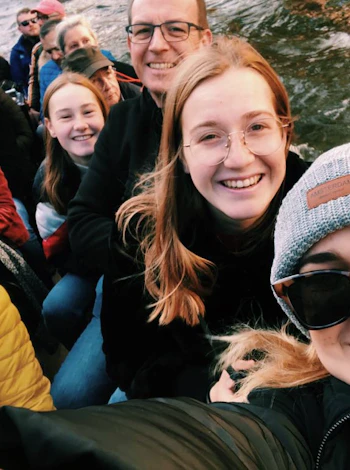
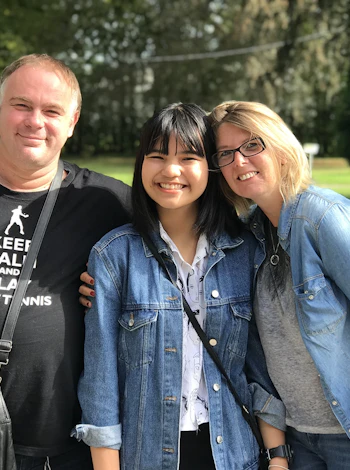

Your school in Belgium
Find out more about your school experience in Belgium
Belgian students begin their educational journey at the age of 6, attending primary school (which is compulsory) until they turn 12. A peculiar aspect of Belgian primary schools is that there are no textbooks; students are given simple sheets or cards, to assist with progressive learning.
Junior and senior secondary school are combined into one and welcome students aged 12 to 18. In Belgium, secondary schooling aims at preparing students for higher education or for entering the workforce. For this reason, students can choose between different programs depending on their end goals.
The Belgian education system
The first cycle of studies focuses on general knowledge, with compulsory subjects such as French, Dutch or German (depending on the school and the area within the country), maths, science, history, geography and sport.
In the second cycle, the goal is to allow each student to explore their talents and areas of interest. Students can therefore specialise in their chosen field, be it humanities, literature, business, social sciences...
Subjects in Belgium
Senior secondary school in Belgium consists of four grades, with the last year being optional and aimed at students who wish to continue with higher education:
- Quatrième (15-16 years old)
- Cinquième (or Poésie) (16-17 years old)
- Sixième (or Rhétorique) (17-18 years old)
- Septième (optional) (18-19 years old)
Belgian secondary school
Generally speaking, Belgian schools don’t offer many extra-curricular activities. If you wish to play a sport or try a recreational activity, the best thing to do is research a club or sports centre in your area, with the help of your host family or area representative.
School in Belgium is demanding and local students are committed to their studies. Make the most of your free time to try new activities and make friendships in the community, including outside of your host school.
Extra-curricular activities
The academic year starts on the last Monday of August, and ends in late June. Throughout the year, there will be several school breaks, including two weeks at the end of October, and time off at times like Christmas, Carnival, and Easter.
A typical school day begins at 8:00 am and ends around 15:30, with a one-hour lunch break.
The school calendar in Belgium
Academic performance in Belgium is assessed in a peculiar way - the grading system is typically numerical and ranges from 0 to 20, where the highest score you can achieve is 20 and the minimum passing score is 10.
Grades in Belgium
Stories from students and parents who have been there
Here are the testimonials of families who have chosen WEP for their exchange experience.
Going with WEP is best
Since 1988, a wide choice of destinations and comprehensive assistance before, during and after your overseas programme. WEP is the ideal partner for your big overseas adventure.
Like you, we also get to choose who we travel with: our schools, host families and overseas partner organisations are carefully selected.
We offer a custom-made insurance policy, specifically designed for our participants, and we have a solid network behind us.
Emergency assistance, overseas and in the UK, is available 7 days out of 7, 24 hours a day, 365 days a year.
Allowing all our participants to live their desired overseas experience is a mission, a challenge we're thrilled to accept.
FAQ
Your host family, local coordinator and your host organisation will provide you with support while you are overseas. WEP will remain in contact with the host organisation and your parents to coordinate and support your experience. In case of an emergency, both you and your family will be able to call an emergency phone number that is answered 24/7.
No. Even if you go on exchange to an English speaking destination, you will not be able to transfer work across to the UK school system. Students should expect to return home to the UK and start a new year of school having taken a gap year. Most applicants participate in a year program with WEP and return to school with the year below on their return. If you participate in a shorter program, your school might be willing to allow you to catch up with missed work so that you can continue in your same school year. All these decisions are made by your school so it is important that you talk with them before applying for the program.
Our partners have different rules regarding your language proficiency - some ask that you have between 1 and 2 years of experience with their language, while others (such as Brazil, Argentina, Denmark, Finland and Norway) do not require you to have learnt their language before departing on exchange.
If you want to go to a country where English is not the first language, you must be committed to learning the language and studying as much as possible before you depart - the more you know on arrival, the easier the transition will be. It wouldn’t be acceptable for you to arrive on exchange with no knowledge of the language, as you would struggle to establish yourself on the program.
Of course, there are English-speaking destinations available if you are not interested in learning another language.
No, it's the host families who choose the student they wish to invite into their home. Based on the documents you will submit as part of your WEP application, one lucky family will choose to open their home and hearts to you, which is why there is no avenue for students participating in a Classic exchange program to choose a specific location.
It may be possible to live with an overseas family that you already know (excluding relatives of the student). However, the family will have to be screened and approved, prepared and supported by our partner organisation in the same manner as any other host family. School enrolment must also be available.
Host families come in all shapes and sizes. There is no set idea of what a family will look like, so it's very important that you have an open mind. Some families have children of your age or younger; some have children who have grown up and moved away; others have not had children. Some are single parent or single person families. Some families have same-sex parents.
We ask that a host family provides a safe and caring environment for a young person to live in. Whatever your family looks like, they will welcome you as part of their family.
Most of our families are based in suburban or rural areas. It is very rare that a family is based in a large city.
In the USA, you can pay an additional fee to request a region or state of your choice. Placement in these areas is not guaranteed but you can state a preference. You only pay the fee if you are placed in the area you have requested.
Alternatively, on our Preferred programs in the USA, Canada and Australia, you can choose where exactly you will live as you can choose your school or school district.
Families in every destination are selected by a similar process:
Home interview -a staff member/representative of our partner organisation visits the family at home. They discuss what is involved in hosting and ensure they have the right motivation for hosting. They also assess the home for suitability and comfort.
References – friends/colleagues of family members are contacted and asked about the family’s ability to host and care for a young person.
Police check – all adult members of the home must complete a criminal background check.
NB: in Japan it is not possible for a criminal check to be secured due to the stringent bureaucracy preventing adults from getting a check of this nature. Most families are known by the school and the school plays a role in recruiting families.
Our partner organisations aim to notify your placement to you at least one month before departure. We hope that it will be no later than this, but, on occasion, the information does arrive later. Placement details could arrive a few days after you lodge your application or several months later. Whatever the situation, you have to be patient and be ready to contact your host family as soon as you receive the placement information sheet.
No. In most destinations your visa will not allow you to work while on the program. We also discourage students from working as it can prevent you from participating fully in other activities while on exchange. Students can volunteer if they wish.
No. Visits from family and friends are definitely not allowed during the exchange program. Your parents can plan to collect you at the end of the program from your host family home, but otherwise they cannot visit. If they do wish to collect you, they must notify WEP so that we can arrange your flight home for the correct date and arrange an extension of your insurance policy where needed. Please note that any additional fees for these changes are not included in the program fee.
Independent travel is not permissible while on exchange. However, you will be able to travel with your host family, school, host organisation and other community groups such as sporting teams or scouts. Again, the foremost aim of the program is educational, and your priority for any holiday periods must be your host family, who will be investing a lot of time, energy and money into this experience - simply in return for your frienship and positive contribution to their household.
Most of our partner organisations offer additional trips or tours that students can join to see more of their host country. The relevant information will be shared with your prior to departure or just after arrival. The cost of the trips or tours is not included in your program fee, so if you wish to join them you should budget for the extra expenses.

More questions?