
 Questions? Reach out!
 Events





High school exchange programme
in Brazil
Immerse yourself in the Brazilian way of life, living with a host family and studying at a local secondary school.


What life is really like
in the Green Giant
Student exchange programme in Brazil
A country as large as our entire continent can only be incredibly diverse. From the Amazon rainforest to the white sandy beaches, through the metropolises and rural villages.
Descendants of Indigenous Americans, Africans, Europeans, and Asians have created an extraordinary culture: samba and bossa nova, world-renowned culinary specialties, the famous Carnival, and football - which is a true art form in Brazil - are just a few of the elements you’ll experience in your everyday life.
A high school exchange programme in Brazil is a joyful and colourful experience that will change you forever.

Be ready: the colours of Brazil are contagious
Nature
Not just beaches and the Amazon, but also tropical savannah, wetlands, prairies, and mountains: Brazil's biodiversity includes numerous endemic species and a high level of diversity. You'll be left speechless!
What’s high school like in Brazil?

Find your mentors
You will experience an informal relationship with your professors, based on mutual trust and respect. Teachers are young, relatable and willing to help: they'll be vital in helping you make the most of your time at their school.
Passions you didn't know you had
Whether it's samba, football or capoeira, you'll discover new interests and make the Brazilian culture yours by participating in after-school activities - these play a big role in the country's educational system.
A unique perspective on Brazil
At school, you will study Portuguese, learn about the history of Latin America, discover the richness of Brazilian art and understand the country's physical and human geography. You'll get to know Brazil under many different lights.
Unity is strenght
The classroom in Brazil is a space to exchange ideas, solve problems and work on shared projects. Get ready for an interactive way of learning, together with your Brazilian classmates - you'll enjoy school like never before!
A great country of incredible beauty. Let yourself be surprised!
Choose authenticity – trust WEP and prepare to be amazed.
On a Classic programme, you will experience the true Brazilian way of life. You may live anywhere in the country, depending on the location of the host family who has chosen you to share this incredible adventure with.

Volunteer host family
Public school
Placement anywhere in Brazil
3, 5 or 10-month programmes available
A cultural, academic and social immersion experience based on sustainable development goals.
With this one-month programme, you will attend one of Brazil's best schools, participate in activities focused on the environment, multiculturalism and inclusion, and live with a local host family.
Volunteer family
Selected state schools
State of São Paulo
4 weeks
Your host family during your year abroad
Gain a second family – they can’t wait to welcome you into their lives!
Here is why:
Family plays a pivotal role in Brazilian culture and is a pillar of society. Family celebrations, traditions and reunions fill people's lives; you will get to experience this firsthand.
Your host family will be an important source of emotional support. They will introduce you to an open style of communication, encouraging you to share both the good and the bad times with them.
Brazilian families tend to be very supportive and present, helping each other in everyday activities, important decision-making, and times of need. Expect to form a very close bond with your host family members.
Family celebrations and events are an essential aspect of Brazilian culture. You will be included in birthday parties, weddings and traditional festivities like Christmas, all fantastic opportunities to connect through food, dancing, music and chitchats.

Your school in Brazil
Find out more about your school experience in Brazil
Education in Brazil goes from kindergarten, Maternal (for children aged 1-6) all the way up to university. Children aged 6 to 14 attend primary school or Ensino Fundamental, which represents the 9 years of compulsory education for all Brazilian youth. Anyone who completes Ensino Fundamental receives a certificate allowing them to access secondary education.
Students aged 15 and over can choose to attend Ensino Médio, the equivalent of a general academic high school, or enrol in Instituições de ensino técnico, which are technical schools. These programmes are typically on to three years in lenght, with most students hoping to attend university completing the full cycle and graduating at the age of 18.
The Brazilian education system
While Maternal focuses exclusively on personal development, from Fundamental onwards all studenys must study Portuguese, English, geography, mathematics, history, science, physical education, information technology, Brazilian literature and art.
From secondary school onwards, a few more subjects are added - typically philosophy and art history. Some schools also offer Spanish as an optional subject.
School subjects
In Brazil, secondary school lasts 3 years, organised as follows:
* 1° ano (15-16 years old)
* 2° ano (16-17 years old)
* 3° ano (17-18 years old)
From the second year onwards, students can personalise their programme according to their personal interests and objectives.
High school in Brazil
Brazilian schools offer several optional subjects and activities. You'll be able to take interesting courses in the domains of art, music, computer science, sports and dancing.
In the afternoon, you will also have free time; local kids usually sign up for private clubs and associations external to the school, allowing them to get involved in language courses, creative activities such as samba or capoeira, or sports including swimming and football.
Extra-curricular activities
Similarly to most countries in the Southern Hemisphere, the school year in Brazil starts in early February and ends in late November.
Schools close for the winter holidays between July 15th and August 1st, while the summer break lasts approximately two and a half months, from the end of November until the following February.
The schedule on a typical school day can vary greatly, depending on the school and the state. Some schools are open full-time, with varying hours (usually including a 2-hour lunch break, perfect for students to relax at home or spend time with friends); other schools offer morning classes from 7:00 am to 12:30 pm or afternoon classes from 1:00 pm to 6:30 pm. Some schools even offer an evening shift, from from 7:00 pm to 11:00 pm.
School calendar and holidays
In Brazil, marks are usually on a scale from 1 to 10, with 10 being the maximum and 5 being the minimum passing mark.
However in school reports, marks are expressed on a scale from 0 to 100, where a score of 60 represents the minimum to pass.
Grading system
Stories from students and parents who have been there
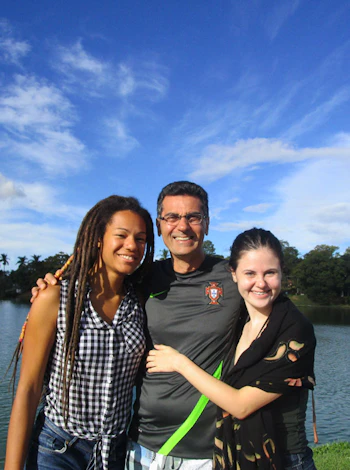
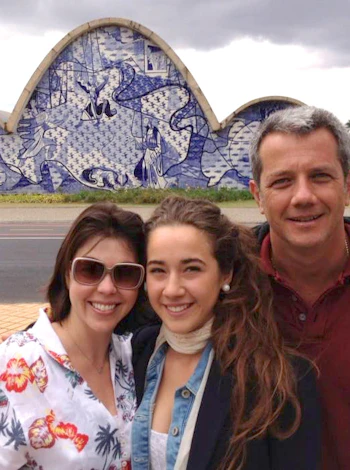
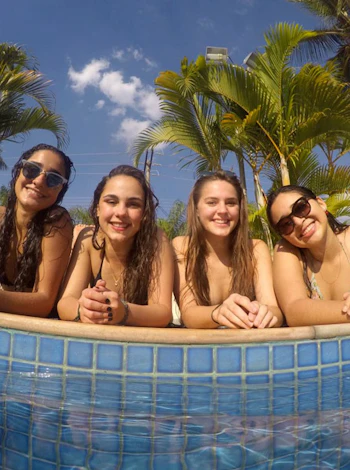
Here are the testimonials of families who have chosen WEP for their exchange experience.
Going with WEP is best
Since 1988, a wide choice of destinations and comprehensive assistance before, during and after your overseas programme. WEP is the ideal partner for your big overseas adventure.
Like you, we also get to choose who we travel with: our schools, host families and overseas partner organisations are carefully selected.
We offer a custom-made insurance policy, specifically designed for our participants, and we have a solid network behind us.
Emergency assistance, overseas and in the UK, is available 7 days out of 7, 24 hours a day, 365 days a year.
Allowing all our participants to live their desired overseas experience is a mission, a challenge we're thrilled to accept.
FAQ
Your host family, local coordinator and your host organisation will provide you with support while you are overseas. WEP will remain in contact with the host organisation and your parents to coordinate and support your experience. In case of an emergency, both you and your family will be able to call an emergency phone number that is answered 24/7.
No. Even if you go on exchange to an English speaking destination, you will not be able to transfer work across to the UK school system. Students should expect to return home to the UK and start a new year of school having taken a gap year. Most applicants participate in a year program with WEP and return to school with the year below on their return. If you participate in a shorter program, your school might be willing to allow you to catch up with missed work so that you can continue in your same school year. All these decisions are made by your school so it is important that you talk with them before applying for the program.
Our partners have different rules regarding your language proficiency - some ask that you have between 1 and 2 years of experience with their language, while others (such as Brazil, Argentina, Denmark, Finland and Norway) do not require you to have learnt their language before departing on exchange.
If you want to go to a country where English is not the first language, you must be committed to learning the language and studying as much as possible before you depart - the more you know on arrival, the easier the transition will be. It wouldn’t be acceptable for you to arrive on exchange with no knowledge of the language, as you would struggle to establish yourself on the program.
Of course, there are English-speaking destinations available if you are not interested in learning another language.
No, it's the host families who choose the student they wish to invite into their home. Based on the documents you will submit as part of your WEP application, one lucky family will choose to open their home and hearts to you, which is why there is no avenue for students participating in a Classic exchange program to choose a specific location.
It may be possible to live with an overseas family that you already know (excluding relatives of the student). However, the family will have to be screened and approved, prepared and supported by our partner organisation in the same manner as any other host family. School enrolment must also be available.
Host families come in all shapes and sizes. There is no set idea of what a family will look like, so it's very important that you have an open mind. Some families have children of your age or younger; some have children who have grown up and moved away; others have not had children. Some are single parent or single person families. Some families have same-sex parents.
We ask that a host family provides a safe and caring environment for a young person to live in. Whatever your family looks like, they will welcome you as part of their family.
Most of our families are based in suburban or rural areas. It is very rare that a family is based in a large city.
In the USA, you can pay an additional fee to request a region or state of your choice. Placement in these areas is not guaranteed but you can state a preference. You only pay the fee if you are placed in the area you have requested.
Alternatively, on our Preferred programs in the USA, Canada and Australia, you can choose where exactly you will live as you can choose your school or school district.
Families in every destination are selected by a similar process:
Home interview -a staff member/representative of our partner organisation visits the family at home. They discuss what is involved in hosting and ensure they have the right motivation for hosting. They also assess the home for suitability and comfort.
References – friends/colleagues of family members are contacted and asked about the family’s ability to host and care for a young person.
Police check – all adult members of the home must complete a criminal background check.
NB: in Japan it is not possible for a criminal check to be secured due to the stringent bureaucracy preventing adults from getting a check of this nature. Most families are known by the school and the school plays a role in recruiting families.
Our partner organisations aim to notify your placement to you at least one month before departure. We hope that it will be no later than this, but, on occasion, the information does arrive later. Placement details could arrive a few days after you lodge your application or several months later. Whatever the situation, you have to be patient and be ready to contact your host family as soon as you receive the placement information sheet.
No. In most destinations your visa will not allow you to work while on the program. We also discourage students from working as it can prevent you from participating fully in other activities while on exchange. Students can volunteer if they wish.
No. Visits from family and friends are definitely not allowed during the exchange program. Your parents can plan to collect you at the end of the program from your host family home, but otherwise they cannot visit. If they do wish to collect you, they must notify WEP so that we can arrange your flight home for the correct date and arrange an extension of your insurance policy where needed. Please note that any additional fees for these changes are not included in the program fee.
Independent travel is not permissible while on exchange. However, you will be able to travel with your host family, school, host organisation and other community groups such as sporting teams or scouts. Again, the foremost aim of the program is educational, and your priority for any holiday periods must be your host family, who will be investing a lot of time, energy and money into this experience - simply in return for your frienship and positive contribution to their household.
Most of our partner organisations offer additional trips or tours that students can join to see more of their host country. The relevant information will be shared with your prior to departure or just after arrival. The cost of the trips or tours is not included in your program fee, so if you wish to join them you should budget for the extra expenses.

More questions?