
 Questions? Reach out!
 Events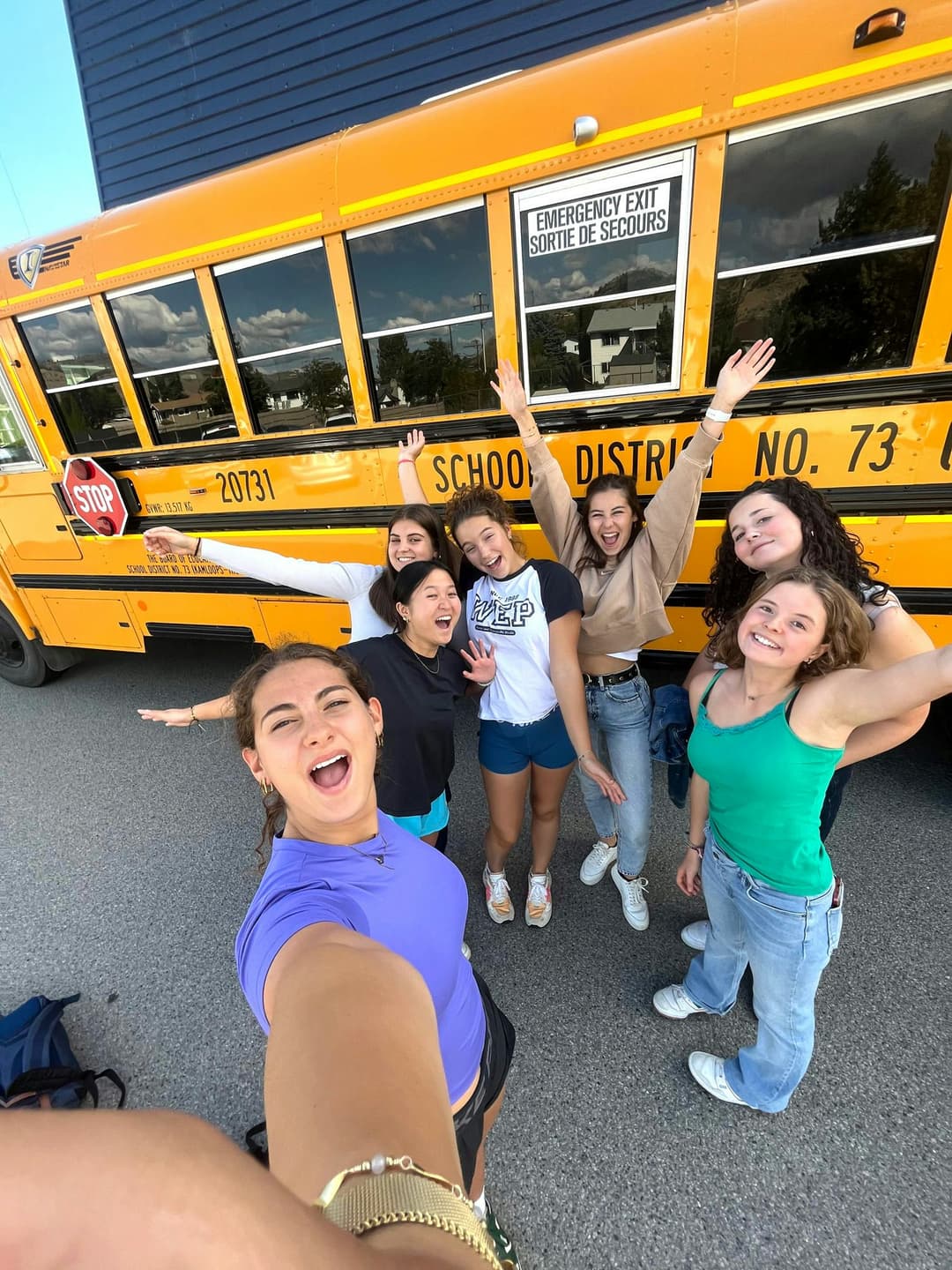





High school exchange programme in the USA
Live the life of an American teenager, on a semester o year exchange programme in the United States.


Experience the American lifestyle
first-hand
Student exchange programme in the States
The United States of America are one of the world’s most welcoming countries: the American people are friendly and love to share their culture and lifestyle with visitors. It is no coincidence that the USA are the number one student exchange destination across the globe!
Join an American family, participate in iconic festivities and experience the famous American school spirit. Without even realising, you’ll start speaking like a local, make long-life friendships and immerse yourself in a different lifestyle – your own American dream becoming daily reality.

Your wide-eyed American dream
School events
Participating in whole-school events such as Homecoming or Prom; cheering on your team at a huge match-day event – whether from the bleachers, or as part of the cheerleading team; singing, acting or playing an instrument in front of a large audience... get ready to step out of your comfort zone!
What’s high school like in the USA?

An enthusiastic community
School motto, mascots and colours; in the USA, you will feel part of the school community and experience the famous American school spirit first-hand.
Diversity and inclusion
You will meet people of every colour, culture, religion and orientation; in American high schools, everyone finds their place. Come as you are!
Yellow school bus
The iconic yellow school bus, used by millions of students each year and featured in countless movies and TV series, is a symbol that plays a significant part in American school culture.
Vast subject offering
Psychology, programming, design, economics, social science (including American history and American government), Latin, art... challenge yourself and make new discoveries every day!
A huge country full of opportunities. Which programme is right for you?
Choose authenticity – trust WEP and prepare to be amazed.
On a WEP Classic programme, you will experience the true essence of American culture and lifestyle. You may be placed in any of the 50 States, depending on the location of the host family who has chosen you to share this incredible adventure with.

Volunteer host family
Public school
Placement anywhere in the USA
Semester or year programmes available
Live the dream – create a tailor-made programme
On a Flex programme to the USA, it's up to you to choose where you'll live, which sports you’d like to try and which subjects you’d like to study. In short, you create an experience that's tailored to you.
Homestay family with reimbursement
High school matched to your needs and preferences
Placement in your chosen area/school
Semester or year programmes available
Your host family during your exchange year
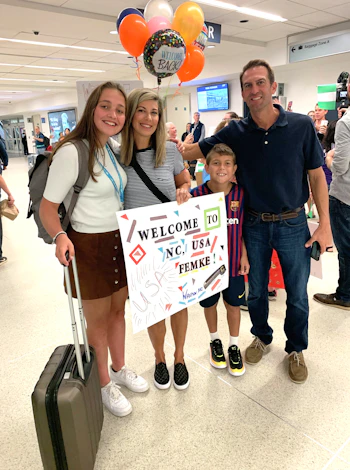
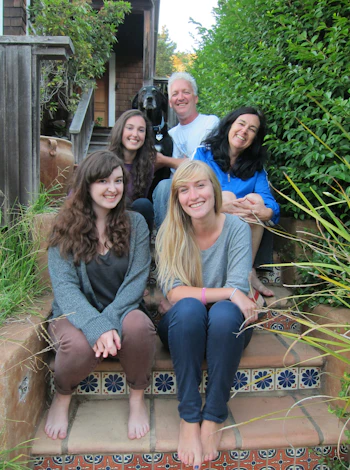
Gain a second family – they can’t wait to welcome you into their lives!
Here is why:
The American hospitality culture is known world-wide. If you’re lucky enough to experience it first-hand, you will soon find out that making friends is not hard at all – just break the ice and take the first step!
There is no such thing as a traditional American family. Leave aside all expectations and prepare to be surprised by new family dynamics and ways of living. It’s all part of the adventure!
You will slide into the routine of an American family and share their daily life. Iconic celebrations, local specialties, unique places that most tourists don’t know about... with your host family, it will all turn into reality.
American teenagers are quite independent and learn how to manage their own time and responsibilities early on. Follow in their footsteps!


Your school in the USA
Find out more about your school experience in the States
Before embarking on a high school exchange program to the USA, it’s a good idea to learn more about how their school system is structured.
Compulsory education in the U.S. includes 12 years (grades) divided into three cycles:
* Elementary School: usually spanning from either kindergarten or grade 1 to grade 5, with students starting at the age of 5-6 and finishing when they're 10-11.
* Junior High School: it typically lasts three years (grades 6 to 8), for students aged 11-14.
* High School: typically including four years (grades 9 to 12). Students start high school at the age of 14-15 until they are approximately 18.
The American education system
All students must study core subjects including English, history, science, social sciences, mathematics and PE. In addition, students choose elective subjects that are different from school to school, and have an impact on the choice of university.
Make the most of your exchange program in the US to discover new topics and passions: psychology, pottery, choir, cinema, design, journalism, media studies, marketing, nursing... take on a new challenge and choose subjects that will help you feel part of the school community: for example, by choosing drama, you may get to take part in a school performance, while choosing journalism will mean contributing to the school newspaper and meeting lots of new people in the process.
School subjects
American high school covers four years:
- 9th grade – Freshman – 14-15 years old
- 10th grade – Sophomore – 15-16 years old
- 11th grade – Junior – 16-17 years old
- 12th grade – Senior – 17-18 years old
The US High School Diploma is the school leaving qualification, awarded to students who meet the graduation requirements set by the local state or provincial government (e.g. achieving enough credits across a range of subjects).
High school in the US
Get ready for a host of extra-curricular activities to choose from in your American high school! These not only complement each student’s academic growth, but they also foster personal, social and physiological development.
Here are a few examples:
Sport: students can usually choose between a wide range of sports, such as soccer, basketball, baseball, American football, tennis, swimming, athletics, volleyball...
Clubs and student associations: American high schools typically have several clubs and student groups, covering a wide range of interests and capturing everyone’s tastes. Think art, music, science, technology, literature, photography, debating, speech contest, public speaking, yearbook...
Cultural and artistic activities: students can take part in activities related to performing arts, such as drama, music, dancing, choir...
Volunteering and social services: many schools encourage volunteering and getting involved in the social sphere – community aid, tutoring, cleaning, and more.
Extra-curricular activities
In the US, each state sets their own school start and end dates. Consequently, the academic year can begin anywhere between the end of July and mid-September, and can end between mid-May and late June of the following year.
The school year is usually divided in two semesters: the fall semester from August/September to December and the spring semester from January to May/June, for a total of 42 weeks. Each semester is further divided into two terms.
Some schools, however, prefer to use a trimester system – which means the year is divided into three sessions: fall (August/September to December), winter (January to March) and spring (March to May/June).
In the US you will have federal (national), state and local holidays. Here is a list of typically American federal holidays, applying to schools across the whole country:
3rd Monday of January: Martin Luther King Jr. Day, to honor the life and legacy of the civil rights activist Martin Luther King Jr.
3rd Monday of February: Presidents Day, to honour all U.S. presidents, past and present.
Last Monday of May: Memorial Day, to pay homage to all U.S. military personnel who died while serving their country.
June 19th: Juneteenth, commemorating the abolition of slavery in the United States.
July 4th: Independence Day, commemorating the adoption of the Declaration of Independence on July 4, 1776, thus establishing the United States of America.
2nd Monday of October: Columbus Day, remembering explorer Christopher Columbus' landing in the New World in 1492.
November 11th: Veterans Day, honoring military veterans of the U.S. Armed Forces
Last Thursday of November: Thanksgiving, a day of giving thanks for the blessings of the past year.
The school calendar
American grades are expressed with letters ranging from A+ to F. The minimum grade required in each subject to pass is C.
In some cases, letter grades are associated to a numerical scale from 1 to 100, where 70 corresponds to a C.
The final marks going on report cards take into account the students’ performance in final exams, but also daily evaluations and routine quizzes and tests.
Grades in the US

Stories from students and parents who have been there
Here are the testimonials of families who have chosen WEP for their exchange experience.
Welcome camp: School exchange in the USA
3 unforgettable days in New York!
Before starting your academic year in the United States, you have the option of taking part in a three-day programme in New York with other participants. This is a unique opportunity to get to know and meet other WEP participants!
Going with WEP is best
Since 1988, a wide choice of destinations and comprehensive assistance before, during and after your overseas programme. WEP is the ideal partner for your big overseas adventure.
Like you, we also get to choose who we travel with: our schools, host families and overseas partner organisations are carefully selected.
We offer a custom-made insurance policy, specifically designed for our participants, and we have a solid network behind us.
Emergency assistance, overseas and in the UK, is available 7 days out of 7, 24 hours a day, 365 days a year.
Allowing all our participants to live their desired overseas experience is a mission, a challenge we're thrilled to accept.
FAQ
Your host family, local coordinator and your host organisation will provide you with support while you are overseas. WEP will remain in contact with the host organisation and your parents to coordinate and support your experience. In case of an emergency, both you and your family will be able to call an emergency phone number that is answered 24/7.
No. Even if you go on exchange to an English speaking destination, you will not be able to transfer work across to the UK school system. Students should expect to return home to the UK and start a new year of school having taken a gap year. Most applicants participate in a year program with WEP and return to school with the year below on their return. If you participate in a shorter program, your school might be willing to allow you to catch up with missed work so that you can continue in your same school year. All these decisions are made by your school so it is important that you talk with them before applying for the program.
Our partners have different rules regarding your language proficiency - some ask that you have between 1 and 2 years of experience with their language, while others (such as Brazil, Argentina, Denmark, Finland and Norway) do not require you to have learnt their language before departing on exchange.
If you want to go to a country where English is not the first language, you must be committed to learning the language and studying as much as possible before you depart - the more you know on arrival, the easier the transition will be. It wouldn’t be acceptable for you to arrive on exchange with no knowledge of the language, as you would struggle to establish yourself on the program.
Of course, there are English-speaking destinations available if you are not interested in learning another language.
No, it's the host families who choose the student they wish to invite into their home. Based on the documents you will submit as part of your WEP application, one lucky family will choose to open their home and hearts to you, which is why there is no avenue for students participating in a Classic exchange program to choose a specific location.
It may be possible to live with an overseas family that you already know (excluding relatives of the student). However, the family will have to be screened and approved, prepared and supported by our partner organisation in the same manner as any other host family. School enrolment must also be available.
Host families come in all shapes and sizes. There is no set idea of what a family will look like, so it's very important that you have an open mind. Some families have children of your age or younger; some have children who have grown up and moved away; others have not had children. Some are single parent or single person families. Some families have same-sex parents.
We ask that a host family provides a safe and caring environment for a young person to live in. Whatever your family looks like, they will welcome you as part of their family.
Most of our families are based in suburban or rural areas. It is very rare that a family is based in a large city.
In the USA, you can pay an additional fee to request a region or state of your choice. Placement in these areas is not guaranteed but you can state a preference. You only pay the fee if you are placed in the area you have requested.
Alternatively, on our Preferred programs in the USA, Canada, Australia, you can choose where exactly you will live as you can choose your school or school district.
Families in every destination are selected by a similar process:
Home interview -a staff member/representative of our partner organisation visits the family at home. They discuss what is involved in hosting and ensure they have the right motivation for hosting. They also assess the home for suitability and comfort.
References – friends/colleagues of family members are contacted and asked about the family’s ability to host and care for a young person.
Police check – all adult members of the home must complete a criminal background check.
NB: in Japan it is not possible for a criminal check to be secured due to the stringent bureaucracy preventing adults from getting a check of this nature. Most families are known by the school and the school plays a role in recruiting families.
Our partner organisations aim to notify your placement to you at least one month before departure. We hope that it will be no later than this, but, on occasion, the information does arrive later. Placement details could arrive a few days after you lodge your application or several months later. Whatever the situation, you have to be patient and be ready to contact your host family as soon as you receive the placement information sheet.
No. In most destinations your visa will not allow you to work while on the program. We also discourage students from working as it can prevent you from participating fully in other activities while on exchange. Students can volunteer if they wish.
No. Visits from family and friends are definitely not allowed during the exchange program. Your parents can plan to collect you at the end of the program from your host family home, but otherwise they cannot visit. If they do wish to collect you, they must notify WEP so that we can arrange your flight home for the correct date and arrange an extension of your insurance policy where needed. Please note that any additional fees for these changes are not included in the program fee.
Independent travel is not permissible while on exchange. However, you will be able to travel with your host family, school, host organisation and other community groups such as sporting teams or scouts. Again, the foremost aim of the program is educational, and your priority for any holiday periods must be your host family, who will be investing a lot of time, energy and money into this experience - simply in return for your frienship and positive contribution to their household.
Most of our partner organisations offer additional trips or tours that students can join to see more of their host country. The relevant information will be shared with your prior to departure or just after arrival. The cost of the trips or tours is not included in your program fee, so if you wish to join them you should budget for the extra expenses

More questions?